
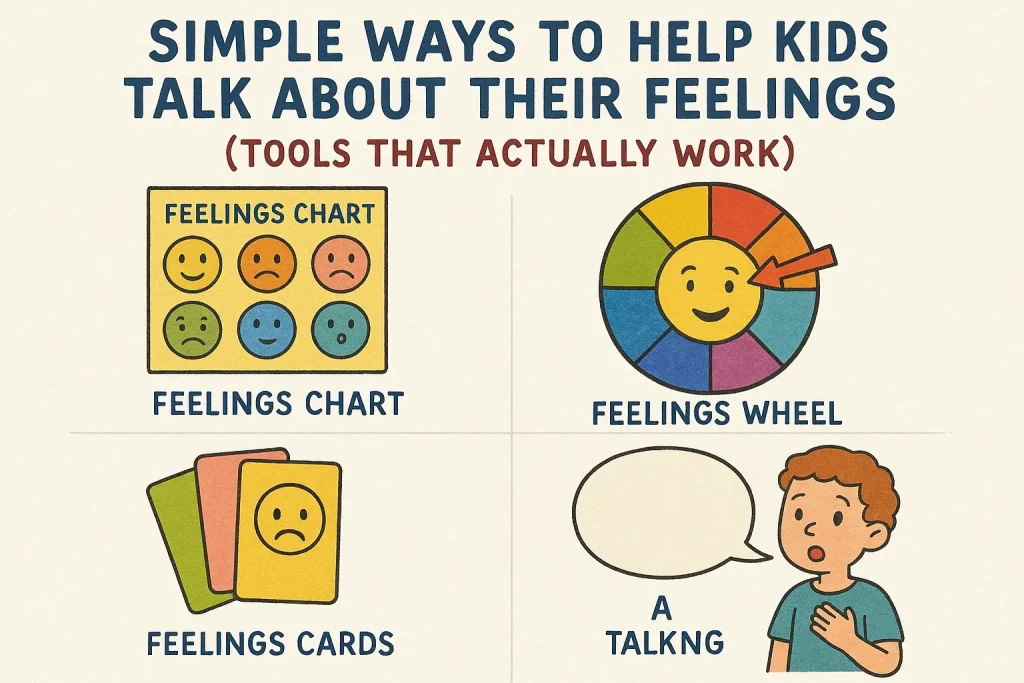
Simple Ways to Help Kids Talk About Their Feelings (Tools That Actually Work)
For many parents, getting a child to open up about their feelings can be confusing and, at times, even a little overwhelming. Kids don’t always have the words to explain what’s going on inside, so big feelings often show up as tantrums, withdrawal, or sudden behavior changes. And in a world where little ones are learning faster than ever, supporting their emotional growth matters just as much as teaching them the ABCs.
The good news is that there are simple, everyday ways to help kids talk about feelings that don’t require long routines or complicated techniques. When parents use the right tools, age-appropriate visuals, playful activities, and gentle language, kids begin to understand their emotions instead of being controlled by them. They feel safer, more confident, and more willing to share what’s happening in their hearts.
This guide outlines easy, practical strategies that naturally fit into family life. Whether your child struggles to identify emotions, gets overwhelmed quickly, or needs a little encouragement, you’ll find supportive ideas that strengthen communication and connection at home.
Helping Kids Express Feelings for Emotional Growth
Helping kids express feelings is a core part of emotional growth, and it begins with giving them simple tools and language they can use every day. Many young children experience intense emotions but struggle to communicate them, which is why emotional regulation is an important part of early development. When parents introduce feeling identification activities for kids, children begin to recognize what different emotions look and feel like.
Using visuals or playful prompts makes it easier for little ones to share whether they’re sad, worried, or frustrated. These kinds of activities help kids express emotions, build confidence, and help them feel safe when opening up. Parents can also model how to stay calm and talk through emotions, which helps kids improve their emotional communication in real-life moments.
As emotional awareness grows, children become more connected, secure, and better equipped to handle everyday challenges.
How to improve a child’s emotional communication
One of the most common parents’ concerns is how to improve a child’s emotional communication, which starts with creating an environment where feelings are encouraged and accepted. Parents can model emotional expression by openly naming their own feelings and showing how to manage them. Introducing emotion cards or mindfulness tools for kids helps children practice naming and processing their emotions.
Engaging in feeling identification activities for kids, like drawing or using play to express emotions, builds emotional vocabulary. Additionally, setting aside time for regular children’s emotional well-being activities, such as talking about the day’s highs and lows, helps kids learn to express their emotions clearly. Over time, these practices create a foundation for better emotional communication, giving children the tools they need to express themselves confidently.
How to Help Kids Talk About Feelings
Learning how to help kids talk about feelings starts with creating a safe predictable space where emotions are welcomed, not judged. Many little ones stay quiet because they don’t know the right words or aren’t sure how adults will respond.
Simple, supportive tools make a big difference. Using emotion cards for kids, picture books, or mindfulness tools for kids can help children understand what different feelings look and sound like.
Parents can also introduce simple ways to teach kids about emotions, like talking about feelings during everyday moments after school, during play, or at bedtime. When kids have tools to help them communicate their feelings, they feel more confident sharing what’s happening inside.
Some children stay silent because they don’t fully understand why kids don’t talk about feelings, so patient modeling is key. When parents name their own emotions calmly, kids learn it’s normal to speak openly, gently strengthening emotional communication over time.
What Are the Emotional Regulations for Kids
Emotional regulation for kids refers to the skills children use to understand, manage, and express their feelings in healthy ways. These skills don’t appear on their own, kids learn them through practice, modeling, and age-appropriate tools.
At a young age, emotions can feel big and overwhelming, so children need guidance to slow down, notice their thoughts, and choose a calmer response.
Parents can support this growth by introducing calming tools for kids, such as breathing exercises, sensory items, or quiet corners that help little ones settle their bodies. Visuals like emotional learning toys or charts also make it easier for kids to identify what’s happening inside.
Structured children’s emotional well-being activities, such as talking about feelings during Storytime or acting out emotions through play, help kids understand that feelings come and go. Over time, these simple habits teach children how to pause, communicate, and handle frustration with more confidence and self-control.
Feelings Identification Activities for Kids That Build Emotional Awareness
Feelings identification activities for kids help little ones understand what their emotions look and feel like. Simple tools such as emotion cards for kids, mirrors, or storytelling prompts make it easier for children to match facial expressions with words like “sad,” “worried,” or “excited.” Parents can also use social-emotional learning products, such as charts, puzzles, or color-coded visuals, to turn feelings into something kids can see and talk about.
Acting out emotions during play or using books to teach kids about feelings builds confidence and emotional vocabulary. These small moments help kids recognize their inner experiences and communicate them more clearly, strengthening emotional awareness over time.
Tools to Help Kids Communicate Emotions Effectively
The right tools to help kids communicate emotions can make expressing feelings feel natural rather than intimidating. Many young children respond well to visual and hands-on supports, such as emotional learning toys, calm-down tools for children, or simple charts showing different emotions. These tools give kids a starting point when they don’t have the words.
Parents can also introduce mindfulness tools for kids, such as breathing cards or sensory objects, to help them slow down before speaking. Pairing these with children’s emotional well-being activities, such as drawing feelings, role-playing, or using a “feelings check-in” routine, creates a safe, predictable structure. Over time, these supports help kids communicate more clearly, confidently, and with greater self-awareness.
Children’s Emotional Well-Being Activities That Build Resilience
Engaging in children’s emotional well-being activities helps little ones develop confidence, coping skills, and resilience. Simple routines like daily check-ins, gratitude moments, or drawing their feelings allow kids to explore emotions in safe, familiar ways.
Parents can also introduce activities to help kids express emotions, such as role-playing real-life scenarios or practicing calming breaths together.
For kids who become overwhelmed easily, supportive practices like tantrum-calming strategies or using gentle anxiety-relief tools for kids can make big feelings more manageable. These activities teach children that emotions aren’t something to fear they can be understood, named, and worked through. Over time, these habits build inner strength and emotional flexibility.
Why Kids Don’t Talk About Feelings
Understanding why kids don’t talk about feelings is key to helping them express themselves. Children often struggle to communicate emotions because they lack the vocabulary, feel overwhelmed by their feelings, or fear being misunderstood.
Sometimes, they don’t know how to process big emotions like anger or sadness. This is where it’s essential to help kids talk about feelings through tools that make emotions easier to understand.
Introducing gentle techniques, such as emotion cards for kids or calming tools for children, helps children feel more comfortable expressing their emotions.
When kids see their parents calmly naming feelings, they begin to recognize that it’s safe to share what they’re going through. Creating a supportive, judgment-free environment encourages them to open up over time.
The Best Tools to Support Kids’ Emotional Growth and Mental Health
When it comes to nurturing emotional growth in children, kids’ mental health products play a vital role in helping children express and understand their emotions. These tools, such as sensory toys, calming apps, or guided journals, provide children with practical ways to cope with and communicate their feelings.
Alongside these, parents should consider the best tools for kids’ emotional development, such as emotion charts, breathing exercises, or interactive books that boost kids confidence, which help children recognize and label their emotions clearly and supportively.
Ultimately, these tools are designed to help kids talk about feelings by giving them the words, strategies, and safe spaces they need to open up. By integrating these resources into daily routines, parents create an environment where emotional expression is welcomed and encouraged, paving the way for healthier emotional communication and well-being.
Conclusion
Helping children grow emotionally starts with giving them the space, tools, and language they need to understand themselves. When parents and caregivers actively help kids talk about feelings, they build a foundation for confidence, empathy, and healthy emotional communication. By using simple strategies, playful activities, and supportive guidance, you can strengthen kids’ emotional development and encourage them to express their thoughts in a safe and meaningful way.
Remember, every child learns at their own pace. With patience and consistency, you can nurture children’s emotional well-being and help them develop the skills they need to handle life challenges. The goal isn’t perfection, it’s connection. And when we help kids talk about feelings regularly, we open the door to a lifetime of emotional strength and resilience.

Jennifer Wilson
Brave Little Minds was inspired by my journey as a mother living with bipolar disorder, and my heartfelt wish to help my son understand and process his feelings.