
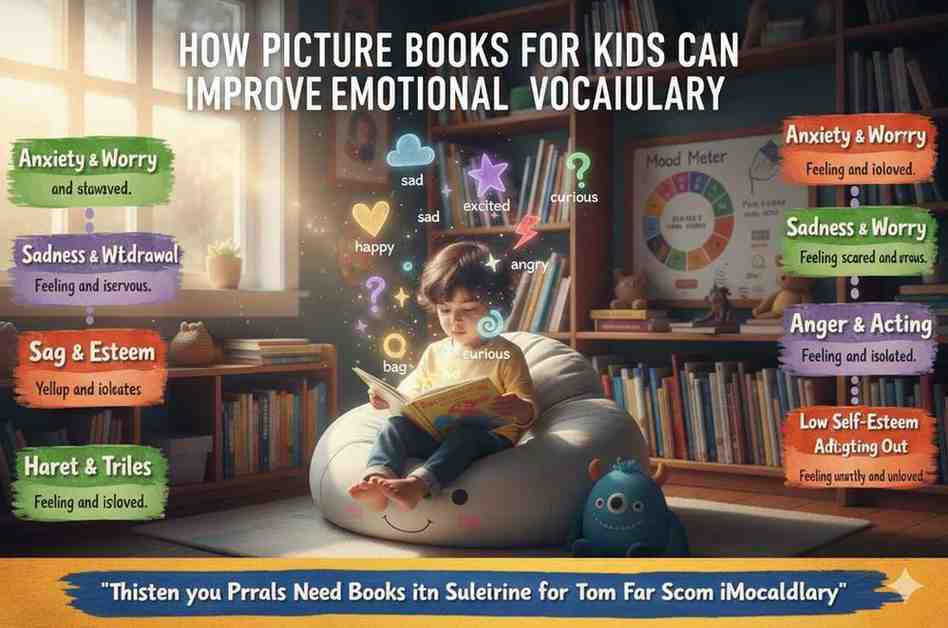
How Picture Books for Kids Can Improve Emotional Vocabulary
Between preschool drop-offs, playdates, and bedtime routines, parents often notice how big emotions can feel for young children. Frustration, excitement, worry, or sadness show up long before kids know how to explain them. This is where Picture books for Kids become more than bedtime stories. They help children see emotions in action and learn how to talk about them in a way that feels safe and familiar.
Stories offer structure for emotional understanding without pressure. Reading together supports emotional learning through storytelling, allowing kids to connect everyday feelings with words they can actually use. Over time, these shared moments help emotions feel manageable rather than confusing.
Why Picture Books for Kids Are Powerful Emotional Teachers
Children learn emotions by watching, listening, and copying what they see. Picture books for Kids offer clear emotional examples through characters who experience situations kids recognize, such as starting school, sharing toys, or feeling left out. Because the emotions belong to a character, children feel free to observe without pressure.
This makes teaching kids emotions easier for parents. Instead of correcting or lecturing, caregivers can ask simple questions like “How do you think they feel?” or “What would you do?” These conversations feel natural and help children understand emotions in context.
Repeated exposure to emotional scenarios also builds confidence. Over time, children begin to recognize patterns, anticipate emotional responses, and develop empathy. This steady process supports emotional literacy for children, giving them tools to understand themselves and relate to others.
How Picture Books Build Emotional Vocabulary for Kids
Language plays a key role in emotional growth. When children hear feeling words used clearly and consistently, they start to adopt that language themselves. Picture books for Kids introduce emotions through situations children already understand, strengthening their emotional vocabulary for kids without overwhelming them.
Stories gently introduce emotion words for children, such as calm, worried, proud, and disappointed, showing how these feelings appear in everyday life. When parents pause to discuss these moments, they reinforce meaning and encourage expression. This process supports teaching feeling words in a way that feels supportive rather than instructional.
Over time, books become reliable kids emotional vocabulary tools, helping them describe their feelings at home, at school, and with friends. This skill is especially valuable as kids grow and face more complex social experiences.
How Shared Reading Strengthens Parent-Child Emotional Connection
Reading together creates more than a learning moment. It builds emotional safety and supports emotional literacy for children in a way that feels natural and reassuring. When parents pause during a story, react to a character’s choices, or listen to a child’s interpretation, they send a powerful message that feelings are worth talking about.
These shared moments make teaching kids emotions feel organic rather than instructional. A simple question or shared laugh during a story opens the door to deeper emotional trust. Over time, children become more comfortable expressing themselves because they associate emotional conversations with warmth, connection, and understanding.
Shared reading also gives parents insight into how their child processes emotions. Stories often act as gentle guides for emotional learning through storytelling, revealing what feelings stand out to a child and where reassurance may be needed. This mutual understanding strengthens the bond and turns everyday reading into a meaningful emotional exchange.
Why Picture Books About Feelings Matter in Early Childhood
Early childhood sets the foundation for emotional health. This is the core mission behind Brave Little Minds, where we create resources to help normalize emotional experiences by showing children that everyone feels upset, excited, or nervous sometimes.
Many parents choose SEL picture books because they support social skills alongside emotional awareness. These stories model kindness, problem-solving, and emotional regulation in ways children can easily understand. Reading books that teach feelings regularly helps children feel comfortable talking about emotions rather than avoiding them.
As families read together, children learn that emotions are safe to explore and discuss. This openness builds trust, strengthens communication, and supports emotional growth well beyond early childhood.
Conclusion
Helping children understand their emotions does not require complicated strategies. It begins with shared reading, thoughtful conversation, and stories that reflect real-life experiences. Picture books for Kids give parents a simple yet powerful way to nurture emotional understanding during everyday moments.
By choosing stories that support empathy and self-expression, families create space for meaningful emotional growth. These early reading experiences help children feel heard, understood, and confident in expressing themselves. If you are ready to support your child’s emotional journey through meaningful stories, Explore Our Emotion-Themed Picture Books and turn everyday reading into moments of connection and growth.

Jennifer Wilson
Brave Little Minds was inspired by my journey as a mother living with bipolar disorder, and my heartfelt wish to help my son understand and process his feelings.