
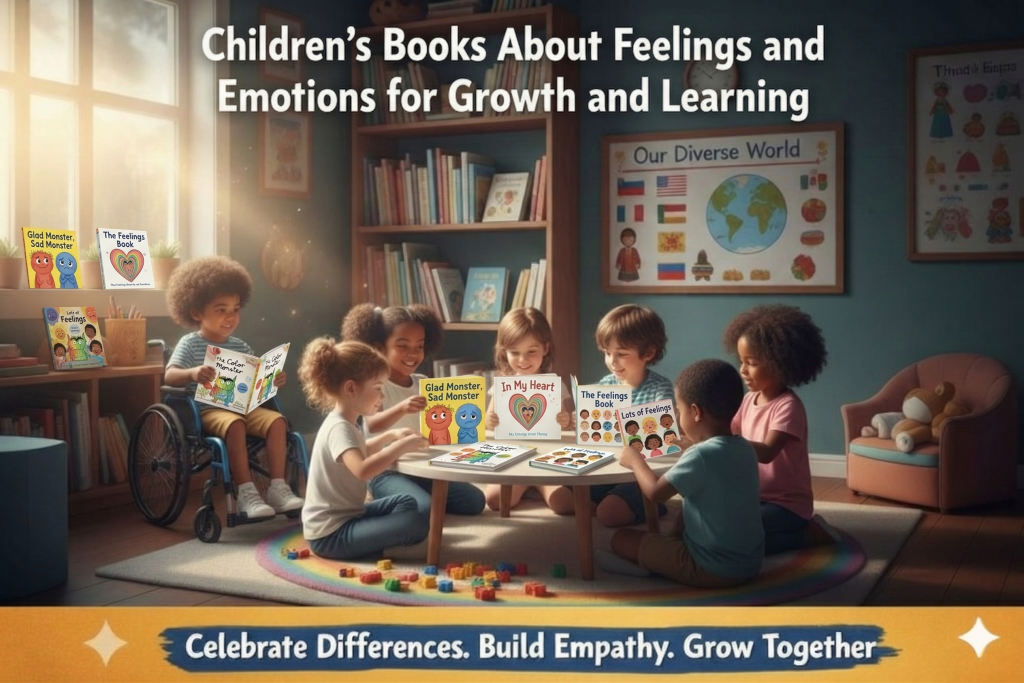
Children’s Books About Feelings and Emotions for Growth and Learning
Helping children understand their feelings is one of the most important parts of early development. Kids experience big emotions, but often don’t have the words to explain them.
That’s where children’s books about feelings and children’s books for emotional learning play a powerful role. They gently guide kids to recognize what they feel, express it in healthy ways, and understand others, too.
Books create a safe space where children can see characters just like them dealing with sadness, anger, excitement, or fear. This makes emotional learning feel natural instead of forced.
When parents read these stories with their children, it also opens the door for meaningful conversations at home.
Best Preschool Books About Feelings and Emotions for Early Learners
For younger children, especially ages 3 to 5, simple stories with clear emotions work best. At this stage, kids are just beginning to understand what they feel, so they need books that are easy to follow and relatable.
Many parents look for preschool books about feelings, preschool books about emotions, and books about feelings for preschoolers to help their little ones build emotional vocabulary. These books often use bright illustrations and short sentences, making them engaging and easy to understand.
Reading together at this age should feel fun, not like a lesson. Ask simple questions like “How do you think the character feels?” or “Have you ever felt like that?” This helps children connect the story to their own experiences.
Using children’s book emotions early on helps children build empathy. They begin to notice emotions in others, not just themselves, which is a key step in social development.
Books on Emotional Regulation and Teaching Coping Skills to Children
As children grow, they don’t just need to recognize emotions, they need to manage them. This is where books on emotional regulation and books teaching coping skills become essential.
Kids between 5 and 8 often struggle with frustration, anger, or anxiety. Books can show them practical ways to calm down, such as deep breathing, talking to someone, or taking a break.
When these strategies are presented through stories, they feel more natural and easier to apply.
At this stage, children’s books about feelings help children realize that emotions are not “good” or “bad,” they are simply part of being human. The key is how we respond to them.
Consistent exposure to children’s book emotions through stories helps kids build lifelong coping habits. They learn that it’s okay to feel upset, but there are healthy ways to handle it.
Books Recommended for 6-Year-Olds About Feelings and Emotions
Around age six, children begin to think more deeply. They start to understand complex emotions like jealousy, embarrassment, and worry.
This is why parents often search for books recommended for 6-year-olds that focus on emotional growth.
At this age, stories can be slightly more detailed and include real-life situations like school challenges, friendships, or family changes. These books help children prepare for everyday experiences. MOMMY’S BIG FEELINGS UNBREAKABLE LOVE continues to be relevant here because it shows emotional ups and downs in a realistic yet comforting way. It reminds children that love stays constant, even when feelings change.
Reading together also gives parents a chance to guide conversations. Ask your child what they would do in a similar situation. This builds problem-solving skills along with emotional awareness.
Using children’s books to express feelings at this stage strengthens communication between parents and kids. Children become more comfortable sharing their thoughts instead of keeping emotions inside.
At the same time, children’s book emotions help children understand others better, which improves friendships and social skills.
Top Books About Emotions for Kids to Understand Their Feelings
As children grow closer to age 10, their emotional world becomes even more complex. They need stories that reflect real challenges while still offering comfort and guidance. That’s why many parents look for books about emotions for kids that go deeper into understanding feelings.
These books often explore themes like confidence, resilience, kindness, and self-awareness. They encourage children to think about their actions and how they affect others.
By this age, children benefit greatly from open discussions after reading. Talk about the story, ask questions, and share your own experiences. This helps children feel heard and supported.
Using children’s books about feelings regularly creates a strong emotional foundation. It prepares kids to handle challenges both at school and in life.
Finally, continuing with children’s books about feelings ensures that emotional learning doesn’t stop as kids grow. Instead, it evolves with them, helping them become confident, empathetic, and emotionally strong individuals.
Conclusion
Raising emotionally aware children doesn’t require complicated methods. Sometimes, all it takes is a good story, a few minutes of reading, and a meaningful conversation.
Books like MOMMY’S BIG FEELINGS UNBREAKABLE LOVE remind both parents and children that emotions are a natural part of life and that love always holds everything together.
Reading children’s books about feelings regularly helps children express themselves more clearly and confidently.
By choosing the right books and reading them together, you’re not just telling a story, you’re shaping your child’s emotional future.

Jennifer Wilson
Brave Little Minds was inspired by my journey as a mother living with bipolar disorder, and my heartfelt wish to help my son understand and process his feelings.